1. Dispelling Performance Software Myths

    Dispelling Performance Software Myths

    By Steve Dinan

    BMW enthusiasts may have noticed that Dinan Performance Software released
    for sale in recent years has been developed in combination with a replacement
    high-flow air filter element and or removal of the Air Filter, Hydrocarbon
    Absorber. The reason for this approach is actually quite simple: the revised
    software calibrations in combination with the additional air-flow provided by a
    superior flowing filter or air box provides greater gains, and therefore represents
    an even better performance value. Naturally Dinan software continues to offer
    additional performance benefits beyond just horsepower and torque gains, such
    as a higher rev-limit, no top speed governor and improved throttle response. Of
    course Dinan software is installed as it was meant to be, directly through the
    factory OBD II connector, no trivial accomplishment from an R&D standpoint but
    clearly the most elegant approach. Communication with BMW ECUs has
    become very challenging, explaining why you see almost every other software
    tuner requiring you to send your ECU to them for bench-programming instead of
    being able to load it through the OBD II connector. (no “down time” for the car
    itself).

    Engine management systems have gotten so sophisticated and the knock-control
    systems so effective that the power gains achievable from software alone are
    often relatively small with modern BMW models. Basically, the engines are tuned
    by the factory to produce nearly optimum power based upon the fuel being used
    and other factors, leaving less power “on the table” for tuners to extract. Having
    said this, we’re seeing some pretty “optimistic” or perhaps more accurately
    “exaggerated” power gain claims in the market. As an example, I’ve seen as
    much as a 25-hp gain claimed on the new M5 from software tuning alone! While
    our research has clearly indicated that there isn’t that much power to be made,
    we have purchased our competitors’ software and evaluated it on the dyno,
    employing time-tested procedures and state of the art equipment. We have yet
    to measure anywhere near the claimed power gains and in fact we are typically
    seeing about half of what is being published, even with the removal of the
    Hydrocarbon Absorber.

    Our competitors often claim that Dinan is “backing off” on potential power gains
    for emissions or warranty reasons, or even because BMW is influencing how
    aggressive Dinan can be. Nothing could be further from the truth; we’re simply
    providing the BMW enthusiast with scientifically valid dyno results. I’m more than
    a little proud to say with confidence that we have the largest R&D department of
    any BMW aftermarket tuner in the US, state of the art equipment, years of
    knowledge and experience. We’re providing the BMW owner with every bit of
    power possible from engine management tuning and certainly not “backing off”
    for any reason. Our published horsepower and torque gains represent real,
    measurable gains, based upon SAE standard J1349.

    We will often recommend a high flow air filter. In the case of the M5, no filter
    replacement is suggested because our tests revealed no measurable increase in
    power over the stock filter. However, the removal of the Hydrocarbon Absorbers,
    which have been demonstrated to restrict air-flow, does enable the Dinan
    software to be more effective, much like a replacement air filter would for other
    models. In both cases more air is flowing, and the Dinan software is tuned for it,
    maximizing power output.

    We’ve talked a bit about software tuning, along with some extra air-flow from less
    restrictive filters. A logical question, then would be what about specific software
    tuning for other modifications that might be applied to the cars. Modern BMW
    engines are so sensitive to accurate tuning and setting faults that in almost every
    case a specific version of software designed for use with an engine modification
    will result in not only greater power gains but reduced potential for malfunctions
    as well. The more extensive the modifications, the more important specific
    software for those modifications becomes. I’ve had customers tell me that there
    is no point in tuning a new BMW because there is no power to be gained due to
    the fact that the cars are tuned so well from the factory. Fortunately for
    enthusiasts, this has not been our experience at all. With the possible exception
    of software, we are seeing substantial gains, as large or even larger in some
    areas than we have realized from older BMW models. Having said that, the high
    performance products themselves require far greater investment in research,
    testing and refinement. As you might imagine, it is far more expensive to develop
    and produce premium quality performance products today than it has ever been.
    If you spend the necessary time to research the vehicle’s inherent weaknesses
    and effectively address them, the power gains can be very significant. Using the
    M5 as an example once again, the intake system we are developing for the V-10
    is producing an additional 20-25 hp with matching software tuning. This will
    represent one of the largest power gains we have achieved with this type of
    product to date.

    In addition to conventional power-tuning such as calibration of fuel mixture,
    ignition timing, cam timing and torque limiters, Dinan software offers additional
    value as discussed earlier. Removal of the top speed governor enables the driver
    to achieve the vehicle’s natural top speed (under the proper conditions, of
    course). The increased rev-limit improves acceleration times and allows for
    optimized shift points. Drive by Wire programming improves throttle response,
    making the car more responsive. In addition, when the car is modified with other
    performance products, Dinan software is tuned for sensor transfer function and
    fault diagnostic functions, reducing the potential of check engine lights and
    ensuring BMW-like drivability. The new BMW control units are very sophisticated
    and time consuming to understand properly but the results of these efforts are
    well worth the investment.

    Earlier in this discussion I mentioned the challenge presented by communication
    issues with the modern ECUs. Dinan has successfully worked through these
    communication issues with most BMW models and we can now load software
    through the OBD II connector on the new (E60) M5, 550, 545, and (E63/64) M6,
    645, 650, as well as the X5 and all of the 6 cylinder 3.0 and 2.5 liter engines
    found in the 330, Z4, X3, X5, and 5 series from March 2003 through 2005.
    That is not to say that future models won’t need to be sent to Dinan for
    programming on the bench but our engineers are hard at work to avoid this
    approach, at the very least minimizing the number of ECUs that need to be
    handled in this manner.

    As you can imagine, these challenges and complications have caused software
    to take longer to get to market along with a sharp increase in the cost of software
    development and the resulting retail prices in recent years. I have seen prices
    from $1,500 to $3,000 for (E60) M5 software! Very high indeed, especially if you
    factor in a realistic power gain claim. However, considering the cost of
    developing software for the new cars and how important it is to a properly
    running performance modified BMW, it doesn’t seem like enough! Dinan has
    invested literally millions of dollars in recent years on software development and
    while it was once a significant profit center for us, we now actually lose money on
    this part of our business when you factor in the exorbitant R&D costs.
    Regardless, we feel software is very important and absolutely necessary in order
    for us to bring you the best running, most reliable performance products possible,
    and at a reasonable price. Even with our matching 4 year/50,000 mile warranty,
    the absolute best guarantee in the business, and the solid engineering behind
    the product, Dinan’s M5 software is the least expensive currently available.

    In the future, things will only become more complex and therefore more
    challenging from an R & D standpoint. The software will take longer to develop, it
    will cost more and the reality is that it will likely produce smaller power gains. At
    the same time, software tuning will become even more important when modifying
    your car with performance hardware! The one notable exception to this is cars
    equipped from the factory with turbo systems. Since the turbo boost control is
    accomplished with software, relatively large power gains can be achieved with
    software alone. With proper software tuning, the boost can be increased on the
    335, for example, to produce an honest 40-50 hp gain. It should be noted that
    there is significantly less exaggeration by tuners producing software for
    turbocharged cars because the gains are significant.

    “Piggy-back” control units will also become more popular as access to the ECUs
    and the software inside becomes more difficult. The naturally aspirated engines
    will produce more modest power gains, just as with software. However, with
    turbos in particular, significant gains can be achieved with piggy-back control
    units. Having said that, piggy-back units simply cannot make as much power as
    properly tuned software, regardless of the claims being made by companies
    selling control units for the 335. Additional important features such as rev-limit
    increases and speed governor removal are very difficult and usually not offered
    with a piggy-back control unit. More faults and frankly compromised reliability will
    also result from these control units when compared to good software. This is
    because it is more difficult to obtain correct sensor, fuel mixtures and ignition
    timing values without getting a fault. In addition, computer controlled turbos have
    safety features that lower boost and re-tune the mixture and timing based on
    heat exchanger efficiency, engine temperature and detonation. Often piggy-back
    control units will compromise these safety programs because they “fight” these
    corrections rather than implement them as would be the case with properly
    engineered software.

    At the risk of being blunt, it is important to realize that not all software available
    out there is calibrated correctly. When we looked at some of the M5 software on
    the market for example, we found a significant number of calibration errors. Sure
    it takes longer to develop a well-engineered and thoroughly tested product. In
    addition, the method by which the software is installed is also an important and
    challenging aspect. While it has certainly taken us longer to get our software to
    market than some of our competitors, our product improves the performance of
    the M5 in many ways, including additional horsepower and torque, and it can be
    installed at your local Authorized Dinan Dealer, eliminating the need for owners
    to remove their ECU in order to send it somewhere for modification, creating
    days of downtime. Clearly the Dinan approach is far more convenient.

    Additionally, Dinan’s software is backed by the best warranty available anywhere,
    matching the new car warranty coverage for up to 4 years/50,000 miles. No one
    offers such a comprehensive warranty on their product, let alone coverage for
    any possible “consequential damages”. I invite you to inquire about the details of
    other tuners’ warranty on their software and/or piggy-back units.
    If you have any questions about Dinan software you are invited to contact a
    Dinan Performance Specialist at 1-800-341-5480.

  2. The Future of the Internal Combustion Engine

    The Future of the Internal Combustion Engine

    By Steve Dinan

    The future:

    Whether or not you believe in global warming or the world wide shortage of oil, one thing is certain: the price of fuel is going up, and governments all over the world are putting laws into effect to improve fuel economy and curb CO2 output.

    This will have profound effects on the cars we love to drive. The only way to make a high performance car engine that produces good power output on demand, low fuel consumption and CO2 output is to decrease the size of the engine and add turbocharging. The 335, 535, and 135 models are just the first few in a long line of cars BMW will likely produce. As we move forward it is likely that displacement will reduce, redlines will lower, and boost will increase. I am sure you all have heard of the new 4.4L Twin Turbo V8 coming out in the new X6. This engine will likely proliferate its way through the entire V8 product line over the next few years. Additional new engines will come out with a constant reduction of displacement and increased boost.

    To get the engines to make ever-increasing power output for their size, material strength will become more important. Once BMW has had a chance to evaluate the long term wear of the new 3.0l inline six, Dinan believes BMW will upgrade the block and crankshaft rods and pistons inside the engine. They will likely increase boost as these upgrades are made, and as their confidence grows. Water jackets will be altered, and heat exchangers will get improvements to handle the extra load.

    Great days ahead:

    With the introduction of turbos, we can now make big power gains at low cost. The software has become incredibly complex, but even expensive software costs a lot less than making a whole turbo or supercharger kit. We are going to be making a lot of really fast cars for relatively low cost.

    Be careful:

    Turbos are like drugs. Every time you add boost the engine makes more power, and so you just want to keep adding more! The problem is that long-term durability can be compromised. Things that will not show up in the first few thousand miles, or even 10k or 20k miles, will eventually show up as the car gets old. So it’s prudent even for us serious enthusiasts to add boost carefully and let the long-term ramifications of our decisions shake out before we go wild. In addition, as the factory upgrades the material strength of the engines themselves, we will be able to increase boost even more. In other words, the next generation of the 3.0L inline six will safely produce a lot more power than the current one.

    Pitfalls of small turbos:

    Turbos of old had a lot of lag. In an effort to reduce this, turbochargers have become very small and are now turning some incredible RPMs. It is very easy to exceed the rpm limit of the turbo, causing it to burst!! So before we can make a lot of boost at high engine RPMs, it will be necessary to increase the size of the turbos. One side affect will be increased lag.

    Computer controlled boost issues:

    With mechanically driven superchargers, like those in our kits for the E36 and E46, any reduction of inlet restriction or improvement to intercooler pressure drop will cause the engine to see an immediate increase in boost and power. On the other hand, with a new computer controlled waste-gate on a turbocharged engine, like that of the 335i, modifications like cold air intakes or intercoolers with improved pressure drop hardly change power output! This is because the computer will lower the turbo RPM to compensate for reduced restriction, causing the engine to continue to see the programmed boost setting and almost the same power output. A small power gain will be realized as the turbo bypasses more exhaust gasses through the waste gate and less through the turbine. Additional power can be had from a gain in intercooler thermal efficiency, but not as much as one might expect. Our testing of intercoolers and cold air intakes has yielded much less power than people are advertising. Good news though, since these modifications reduce turbo RPM, we can increase the boost at high rpm where it’s falling off, increase peak power output, and extend the rev band without over-reving the turbos.

    I hope you all enjoy the new direction at BMW. I know I will!

    Steve Dinan

  3. E90 E92 M3 Exhaust

    DINAN’S E90-92 M3 EXHAUST

    by: Steve Dinan

    After many months of development and far too many dyno-runs to count, our Free Flow Exhaust for the M3 is now shipping. I couldn’t be happier with the finished product as our team of engineers were able to accomplish every goal I had established for the performance muffler: improved flow for increased power, reduction of weight, a “throaty” exhaust note and a purposeful high performance look. As our M3 exhaust employs a very unique design approach in order to accomplish our objectives, I thought that a more technical discussion on the subject might be of interest to performance enthusiasts. This paper will discuss a bit of general exhaust theory, the specific approach we have employed for the E90-92 M3 exhaust, as well as attempt to dispel some common misconceptions about exhaust tuning.

    Exhaust Theory

    There are three major areas of the complete exhaust system that are typically tuned for enhanced performance; the exhaust manifold with catalyst or header, the middle exhaust section with catalyst and the rear muffler(s). The exhaust manifold’s length, tubing diameter and the manner in which each cylinder is linked to the other is critical when attempting to maximize an engine’s power output. The manifold configuration can be manipulated in order to generate maximum power throughout the entire RPM range, changing the shape of the power curve accordingly. Naturally some compromise must be accepted when tuning an exhaust manifold for a street-car as the goal is typically to ensure balanced power output at low, middle and high rpm. This is in contrast to a race-engine where the exhaust manifold can be tuned specifically for maximum performance at high rpm. After the exhaust manifold or header, optimum performance comes from making the balance of the exhaust system as short and large as possible. This approach will result in greater engine efficiency for maximum power, as well as minimizing the weight of the system. Probably the best example of an optimized, nocompromise exhaust system would be that of an F1 racecar. If you have ever had the opportunity to hear a F1 exhaust note, I think you will agree that it is best described as deafening. Clearly an exhaust system that even approached such a volume level in a performance street-car would draw far too much of the wrong sort of attention. Therefore, a modern street-car exhaust represents a number of performance compromises in order to achieve an acceptable exhaust volume, as well as meeting emissions standards. In order to accommodate the various components and baffling necessary for a street-car, the exhaust system becomes longer and the flow of gasses more circuitous as noise and emissions standards are addressed. Each bend in the exhaust tubing, catalytic converter, resonator and so forth introduces restrictions to the exhaust flow, particularly at higher rpm where flow is most critical. Exhaust flow can actually reach hundreds of miles per hour when the engine is producing maximum power, which results in power robbing friction along the exhaust tubing walls, particularly when the gasses must change direction. This friction results in increased backpressure that can be quantified with a pressure gauge. This backpressure restricts the amount of gasses that can be passed through the engine, resulting in a reduction of peak power. I’m fairly certain that many of you have been exposed to a “bench racing legend” that would have you believe that increased backpressure will improve low rpm power and that low backpressure will increase high rpm output. Nothing could be further from the truth. An exhaust system is sized for maximum flow at wide-open-throttle and peak rpm. All exhaust systems are “oversized” for lower engine speeds (rpm), as backpressure is so insignificant that it can’t even be measured. Less backpressure always results in more power at higher rpm, with no negative effect on lower engine speed performance. The amount of power that can be extracted from an engine at a given rpm as a result of exhaust design is really limited by the exhaust manifold or header. After the header, less backpressure is always better. The real challenge when tuning a street-car exhaust is to increase flow without making the system loud or eliminating catalyst that will prevent you from registering your car because of your local emissions standards. It is also important to understand that vehicle manufacturers must meet more stringent maximum noise requirements than aftermarket manufacturers. Headers have become very popular in recent years because they make substantial power gains. The real reason they gain power has more to do with eliminating the front catalyst that is built into the header than the header itself. Modern M Cars have very high quality well tuned headers but to meet the emissions standards, there are four catalysts, two in the header and two more in the center exhaust section. The two three-way catalysts on the header are monitored by secondary O2 sensors to report catalyst efficiency to the ECU. There are two more catalysts mounted under the floor before the resonator and are not monitored by the O2 sensors for catalyst efficiency. The front catalyst mounted on the header are usually twice as restrictive as the rear catalyst and are as close to the engine as necessary to light off cold to improve exhaust emissions on cold start. Dinan has decided not to make headers for the new M Cars. The reason is removing the front catalyst poses some severe problems aside from the obvious one which is, it is illegal. While many companies have headers to remove the front catalyst and software to prevent the car from setting a fault, these software changes also prevent the ECU from setting catalyst readiness monitors. Readiness monitor is software that checks that circuits are complete and conditions are correct (ready) to monitor a system and determine if there is a malfunction. Most states require a readiness check to pass a smog test even if they don’t have a tailpipe test to measure the emissions output like California does. Since you cannot pass the readiness test once you have removed the front catalyst it is impossible to get a smog test on a new car once they have been removed. In California the car won’t pass the tailpipe test as well. It is a day or two of labor to remove the catalyst and put the stock ones on and then another day or two to put your headers on every time you need a smog inspection if you choose to circumvent the law. A lot of hassle and cost for about 20hp. This is why we don’t offer headers on new M cars. In addition we just don’t want to make a car that dirty pollution wise since we need to live on the planet. We also don’t want our customers to be put in that situation when they need a smog test for their car. On racing applications like our prototype cars we make custom headers tuned for the racing engine with no catalyst. Dinan will be making a middle racing exhaust system for the M3 similar to the one we manufacture for the M5 and M6. This racing exhaust will remove the second stage or rear catalyst. Removing the rear catalysts with a high performance middle exhaust section while still illegal is a lot more practical. First off the middle exhaust system cost about ½ to 1/3 the cost of a header. The labor is also much less to install the middle exhaust section. The car will still pass a smog test at the tailpipe and there are no faults set or readiness issues to deal with when you get a smog test either. This is an Ideal system for a showroom stock race car T-1 T-2 where the car must pass a smog test at the end of a race and cannot have a check engine light on. The gain about half of the front cat or 10 hp but there is no hassle and it is a lot less money. On Dinan’s middle exhaust system we also include 3 different noise level resonators so you can get the sound you are looking for from your car. Moving on to the rear exhaust or mufflers, BMW’s current M-cars feature a distinctive quad exhaust tip design, punctuating the car’s high performance image. This approach is very logical when applied to a “V” engine configuration because there are natural dual exhaust outputs with this engine design, as indicated in the following diagram.

    M5 EXHAUST

    Rear Exhaust Design Approach

    When it comes to the E90-92 M3 muffler, however, the vehicle design did not lend itself to the more traditional twin muffler approach, necessitating a cross-over within the single muffler case in order to feed the four tips and reduce noise to an acceptable level. This design requires that the exhaust flow has two 90 degree bends in each side plus a “Y” pipe on each side to go from one input pipe to two tailpipes per side. These turns and “Y” pipes as indicated in the following diagram, increase back pressure. Months of testing demonstrated conclusively, that requiring exhaust gasses to make four 90 degree turns within the stock muffler’s internal chamber results in a increase in back-pressure. The stock exhaust also incorporates a Helmholtz chamber within the muffler to tune low frequency drone out of the exhaust. During development it became obvious that the Helmholtz chamber would be necessary to maintain reasonable noise levels. In addition the “Y” pipe at the tail-pipe amplified the low frequency drone when compared to a single straight pipe. Because of power robbing turns and weight it was decided the mufflers needed to be straight trough with no bends or turns within the muffler case. Also because of low frequency drone it would also be necessary to incorporate a Helmholtz chamber within the exhaust. With this combination we had power, light weight, reduced noise and low cost. All the things you are looking for in a high performance exhaust. However once we incorporated a “Y” pipe at the tail pipe like the original BMW design to make quad exhaust tips the low frequency drone came back. It was possible to make the drone go away with the 4 – 90 degree turns like BMW used but we lost significant power with a large increase in weight and cost. Or it was possible to get good flow and a low frequency drone with 4 tailpipe tips, but it was impossible to get both. We considered using an external Helmholtz chamber like some companies have done. But this added additional weight and cost and was deemed unacceptable. Analyzing other after-market manufacturer’s mufflers revealed that they had all made a compromise because of these problems. Either they had high backpressure from keeping the BMW design or very loud low frequency drone with straight through twin muffler designs or heavy expensive exhausts with straight through designs and external Helmholtz chambers. Despite mounting pressure from M3 owners to deliver the Dinan exhaust, we made a conscious decision to continue working toward a design that accomplished our stated objectives. While we certainly would have preferred to begin shipping the systems sooner, I simply won’t accept compromises when it comes to performance. We worked and worked at designs that would maintain the dual exhaust outlets but each iteration resulted in a heavy, low frequency drone with far too much back-pressure to produce any substantial power gains. After analyzing many designs, we came to the conclusion that a more radical approach was required in order to produce a truly high performance exhaust. Further pressure tests and dyno runs confirmed our suspicions about the best approach for the M3 muffler. Adopting a completely new design approach resulted in a significant improvement in flow. The exhaust note became throaty and aggressive, without being loud. Weight was reduced from 56 to 41 lbs. As you can see from the diagram below, our M3 exhaust utilizes the one active outlet per side. Recognizing that the four tips have become a significant visual design element for modern M-cars, as well as the fact that the rear valance has a cut out to accommodate four tips, both sides have a second tip that is inactive. While they are non-functional, the M-car look is retained without compromising performance. The 3″ tips have been ceramic coated black for a striking high performance look, while eliminating any concern over uneven discoloration that would occur with polished stainless. The system produces measurable power gains, looks great, is light weight, low cost and produces the exhaust note M3 owners have been waiting for. I believe that this latest exhaust design underscores the importance of real engineering and extensive testing. The end result is BMW-like fit and finish combined with the best warranty in the business makes for the definitive solution for your high performance M3 exhaust.

  4. The Dangers of Power Pulleys and Understanding the Harmonic Damper

    The Dangers of Power Pulleys and Understanding the Harmonic Damper

    by: Steve Dinan

    I have been threatening for a long time to write a series of technical articles to educate consumers and to dispel misconceptions that exist about automotive after-market technology. Motivated by problems with customer’s cars resulting from the installation of power pulleys, I wish to explain the potential dangers of these products and address the damage they cause to engines.

    The theory behind the power pulley is that a reduction in the speed of the accessory drive will minimize the parasitic losses that rob power from the engine. Parasitic power losses are a result of the energy that the engine uses to turn accessory components such as the alternator and water pump, instead of producing power for acceleration. In an attempt to minimize this energy loss, many companies claim to produce additional power by removing the harmonic damper and replacing it with a lightweight assembly. While a small power gain can be realized, there are a significant number of potential problems associated with this modification, some that are small and one which is particularly large and damaging!

    The popular method for making power pulleys on E36 engines is by removing the harmonic damper and replacing it with a lightweight alloy assembly. This is a very dangerous product because this damper is essential to the longevity of an engine. The substitution of this part often results in severe engine damage.

    It is also important to understand that while the engine in a BMW is designed by a team of qualified engineers, these power pulleys are created and installed by people who do not understand some very important principles of physics. I would first like to give a brief explanation of these principles which are critical to the proper operation of an engine.

    1) Elastic Deformation

    Though it is common belief that large steel parts such as crankshafts are rigid and inflexible, this is not true. When a force acts on a crank it bends, flexes and twists just as a rubber band would. While this movement is often very small, it can have a significant impact on how an engine functions.

    2) Natural Frequency

    All objects have a natural frequency that they resonate (vibrate) at when struck with a hammer. An everyday example of this is a tuning fork. The sound that a particular fork makes is directly related to the frequency that it is vibrating at. This is its “natural frequency,” that is dictated by the size, shape and material of the instrument. Just like a tuning fork, a crankshaft has a natural frequency that it vibrates at when struck. An important aspect of this principle is that when an object is exposed to a heavily amplified order of its own natural frequency, it will begin to resonate with increasing vigor until it vibrates itself to pieces (fatigue failure).

    3) Fatigue Failure

    Fatigue failure is when a material, metal in this case, breaks from repeated twisting or bending. A paper clip makes a great example. Take a paper clip and flex it back and forth 90° or so. After about 10 oscillations the paper clip will break of fatigue failure.

    The explanation of the destructive nature of power pulleys begins with the two basic balance and vibration modes in an internal combustion engine. It is of great importance that these modes are understood as being separate and distinct.

    1) The vibration of the engine and its rigid components caused by the imbalance of the rotating and reciprocating parts. This is why we have counterweights on the crankshaft to offset the mass of the piston and rod as well as the reason for balancing the components in the engine.

    2) The vibration of the engine components due to their individual elastic deformations. These deformations are a result of the periodic combustion impulses that create torsional forces on the crankshaft and camshaft. These torques excite the shafts into sequential orders of vibration, and lateral oscillation. Engine vibration of this sort is counteracted by the harmonic damper and is the primary subject of this paper.

    Torsional Vibration (Natural Frequency)

    Every time a cylinder fires, the force twists the crankshaft. When the cylinder stops firing the force ceases to act and the crankshaft starts to return to the untwisted position. However, the crankshaft will overshoot and begin to twist in the opposite direction, and then back again. Though this back-and-forth twisting motion decays over a number of repetitions due to internal friction, the frequency of vibration remains unique to the particular crankshaft.

    This motion is complicated in the case of a crankshaft because the amplitude of the vibration varies along the shaft. The crankshaft will experience torsional vibrations of the greatest amplitude at the point furthest from the flywheel or load.

    Harmonic (sine wave) Torque Curves

    Each time a cylinder fires, force is translated through the piston and the connecting rod to the crankshaft pin. This force is then applied tangentially to, and causes the rotation of the crankshaft.

    The sequence of forces that the crankshaft is subjected to is commonly organized into variable tangential torque curves that in turn can be resolved into either a constant mean torque curve or an infinite number of sine wave torque curves. These curves, known as harmonics, follow orders that depend on the number of complete vibrations (cylinder pulses) per revolution. Accordingly, the tangential crankshaft torque is comprised of many harmonics of varying amplitudes and frequencies. This is where the name “harmonic damper” originates.

    Critical RPM’s

    When the crankshaft is revolving at an RPM such that the torque frequency, or one of the harmonic sine wave frequencies coincides with the natural frequency of the shaft, resonance occurs. Thus, the crankshaft RPM at which this resonance occurs is known a critical speed. A modern automobile engine will commonly pass through multiple critical speeds over the range of its possible RPM’s. These speeds are categorized into either major or minor critical RPM’s.

    Major and Minor Critical RPM’s

    Major and minor critical RPM’s are different due to the fact that some harmonics assist one another in producing large vibrations, whereas other harmonics cancel each other out. Hence, the important critical RPM’s have harmonics that build on one another to amplify the torsional motion of the crankshaft. These critical RPM’s are know as the “major criticals”. Conversely, the “minor criticals” exist at RPM’s that tend to cancel and damp the oscillations of the crankshaft.

    If the RPM remains at or near one of the major criticals for any length of time, fatigue failure of the crankshaft is probable. Major critical RPM’s are dangerous, and either must be avoided or properly damped. Additionally, smaller but still serious problems can result from an undamped crankshaft. The oscillation of the crankshaft at a major critical speed will commonly sheer the front crank pulley and the flywheel from the crankshaft. I have witnessed front pulley hub keys being sheered, flywheels coming loose, and clutch covers coming apart. These failures have often required crankshaft and/or gearbox replacement.

    Harmonic Dampers

    Crankshaft failure can be prevented by mounting some form of vibration damper at the front end of the crankshaft that is capable of absorbing and dissipating the majority of the vibratory energy. Once absorbed by the damper the energy is released in the form of heat, making adequate cooling a necessity. This heat dissipation was visibly essential in Tom Milner’s PTG racing M3 which channeled air from the brake ducts to the harmonic damper, in order to keep the damper at optimal operating temperatures. While there are various types of torsional vibration dampers, BMW engines are primarily designed with “tuned rubber” dampers.

    It is also important to note that while the large springs of a dual mass flywheel absorb some of the torsional impulses conveyed to the crankshaft, they are not harmonic dampers, and are only responsible for a small reduction in vibration.

    In addition to the crankshaft issue, other problems can result from slowing down the accessories below their designed speeds, particularly at idle. Slowing the alternator down can result in reduced charging of the battery, dimming of the lights, and computer malfunctions. Slowing of the water pump and fan can result in warm running, while slowing of the power steering can cause stiff steering at idle and groaning noises. It is possible to implement design corrections and avoid these scenarios, but this would require additional components and/or software.

    Our motto at Dinan is “Performance without sacrifice”. We feel our customers expect ultra high performance along with the legendary comfort and reliability of a standard BMW.

    While it is common that a Dinan BMW is the fastest BMW you can buy, performance is not our only goal. Dinan isn’t just trying to make the fastest car. Instead a host of considerations go into the development of our products. Dinan puts much more effort into these other areas than does our competition.

    These considerations are Performance, Reliability (Warranty), Driveability, Emissions, Value, Fit and Finish. We feel that the power pulley is a bad way to get extra power from and engine and the potential for serious engine damage is too great.

    This is a simplified explanation meant to be comprehensible by those who are not automotive engineers. In trying to simplify an extremely complex topic some precision was sacrificed although we believe this explanation to be as accurate as possible. We encourage our customers to educate themselves and understand the automotive after-market because we believe that our products are the best researched, engineered, and fabricated products available.

    For those interested in a more in depth and technical explanation of this topic, the reference book is Advanced Engine Technology, written by Heinz Heisler MSc,BSc,FIMI,MIRTE,MCIT. Heinz Heisler is the Head of Transportation Studies at The College of North West London. His book is distributed in this country by the SAE (Society of Automotive Engineers).

  5. Suspension Travel

     Suspension Travel

    By Steve Dinan

    Many newer BMWs provide very little suspension travel from the factory. In addition, many of the newer cars employ shorter progressive bump stops as compared to previous designs. A progressive bump stop is designed to absorb and dissipate energy when a wheel hits a large bump and a significant amount of the available wheel travel is used. As the bump stop is progressive, the initial contact is not felt by the driver. However, the bump stop is designed to gradually stiffen so that a large amount of energy can be absorbed without upsetting the car when it is on the limit of adhesion. If you go back many years, bump stops were simply crash barriers that prevented damage to the suspension system when all of the available travel was used up. Like so many automotive components, today’s bump stops feature more high-tech designs and are now a progressive spring of sorts that are actually part of the total spring rate. When properly designed, the current designs allow the cars to handle enormous bumps while maintaining adequate control.

    When lowering your car, it is important to properly “tune” the bump stops in order to maintain the appropriate amount of suspension travel. Clearly they must be made shorter as the lower ride height will reduce available travel. Many suspension companies will instruct you to simply cut the bump stops in order to shorten them. I highly recommend against this approach! As they are progressive, if you cut the soft end off of the bump stop you will most certainly feel the contact more because it is no longer as soft as it should be. If you cut off the stiff end, it will not be able to absorb enough energy over bigger bumps and the car will be too stiff, causing the car to bounce when the bump stop is fully compressed.

    As I mentioned before, BMWs are now designed with less suspension travel and shorter bump stops than ever before! This makes it more challenging to lower the cars without severely compromising handling capabilities, let alone ride quality.

    The new M3 and M6 are two examples of this situation. In stock form, the M3 has just 0.5 in. of suspension travel in the front before the progressive bump stop is contacted. In stock form the M6 has just 0.5 in. of travel front and rear. Both cars are equipped with very short bumps stops from BMW, making it difficult to make them any shorter and still be effective in terms of absorbing adequate amounts of energy. These models represent the most extreme examples of this issue we have encountered to date!

    A significant part of any Dinan suspension design is to thoroughly analyze suspension travel and bump stop requirements. The shortest bump stop that we could employ needed to be 2.125 in. long in order to absorb an adequate amount of energy, making it only 0.25 in. shorter than stock! Since 0.5 in. of travel is the acceptable minimum to avoid premature bump stop contact, we had to actually increase travel if we wanted to lower the cars at all. In addition, all of the M6 models and most of the M3s are equipped with EDC (electronic damping control). The damping characteristics of the stock EDC shocks are very good, so our objectives included making the lowered cars function with the factory electronic shocks.

    In addition, the M3s not equipped with EDC also feature a great stock shock. They are lightweight and offer excellent damping characteristics, necessitating the same considerations as with the M6 and EDC equipped M3s.

    The Dinan solution was to increase travel in the spring perch area, without requiring replacement of either type of stock shock. This was accomplished in the front of the M3 and M6 by modifying the stock upper guide support

    (Or spring perch) and fabricating completely new upper spring perches in the rear of the M6!

    For the M3, we were able to shorten the front guide support by 0.3 in. so that when combined with the shorter bump stops a total of 0.55 in. of travel is achieved. This enabled us to lower the M3 by 0.5 in. while retaining the appropriate amount of travel for improved handling and civilized ride quality.

    For the M6, the spring perches were shortened by 0.5 in. in the front and 0.85 in. in the rear, so when combined with a shorter bump stop travel is increased to 0.75 in. up front and 1.1 in. in the rear. This enabled us to lower the car by 0.75 in. front and rear while retaining the appropriate amount of suspension travel. Everyone, including Dinan, would like to lower the M3 and M6 even more, but we will not compromise the performance and ride quality purely for the sake of aesthetics.

    The custom spring perches and bump stops certainly add some cost to the spring set/suspension system but are well worth the investment when you consider the dramatic

    improvements in handling and maintaining civilized ride quality. Recent features appearing in Modified Luxury and Exotics, Bimmer and many more to come will attest to the benefits of a properly tuned suspension system.

    Feel free to contact a Dinan performance specialist with any questions you may have at 800-341-5480.

    Performance without sacrifice

  6. Mike Miller Alternative Maintenance Schedule

    Alternative BMW Maintenance Schedule

    Enhanced Maintenance Schedule by Mike Miller of Bimmer and Roundel magazines


    BMW’s Free Scheduled Maintenance program means that BMW will perform scheduled maintenance free of charge during the BMW New Vehicle Limited Warranty period.

    Prior to the advent of BMW Free Scheduled Maintenance, approximate BMW maintenance recommendations were: automatic transmission fluid (ATF) and filter changes every 15,000 miles, manual gearbox and differential oil changes every 30,000 miles, annual brake fluid changes, and coolant changes every two years. Spark plugs, air filter, and fuel filters were typically replaced every 30,000 miles on most BMWs (this is a tune-up) except M cars up to 1995, which got new spark plugs and a valve adjustment every 15,000. Later advances in computer engine management and spark plug technology legitimately allow 60,000-mile spark plug life if not more.

    Prior to Free Scheduled Maintenance, you couldn’t change engine oil often enough according to most dealerships. And when the car was in the shop it would often be due for this service or that inspection, all at the owner’s expense.

    But once BMW began paying for scheduled maintenance, lo and behold the “schedule” was revised. Now, magically, the cars hardly need any maintenance at all! The 1,200-mile break-in service was done away with except for M cars. Engine oil suddenly lasts 15,000 miles (dealers are supposed to use BMW synthetic oil). Manual gearbox and differential oil? No worries there – now BMW says they NEVER need to be changed, it’s “lifetime fill.” Brake fluid and coolant service intervals were doubled with no change in the original BMW brake fluid and anti-freeze dealers are supposed to use.

    So, is Free Scheduled Maintenance all about marketing and cost reduction – BMW’s costs? Draw your own conclusions. There is no doubt that many buyers incorrectly view BMWs as “high maintenance” cars. Nothing can address that more effectively than Free Scheduled Maintenance. But the operative word in the name is “scheduled.” In my opinion, extended service intervals and “lifetime fill” came very close on the heels of Free Scheduled Maintenance.

    This is an alternative to BMW’s factory-recommended maintenance schedule. It is not, “Mike Miller’s maintenance schedule.” It is actually BMW’s maintenance schedule, more or less, which was used prior to Free Scheduled Maintenance. It also represents my opinion, based upon my experience and that of my readers, tech advisors, and professional BMW technicians both dealer and independent. I have prepared it because of the large number of readers asking for this information. The fact that my opinions may differ from those of others does not mean anyone is necessarily right or wrong. You will get a different answer from every person you ask about routine vehicle maintenance.

    You should also know that in my work I have observed the most common reason for BMW drivability problems in contemporary cars with over 100,000 miles is that they need a tune up – spark plugs, air filter, and fuel filter.

    Break-in Service for New Cars


    Traditionally, BMW performed a break-in service at 1,200 miles on new cars, which included changing the engine oil and filter, manual gearbox oil or automatic transmission fluid, and differential oil. With the advent of Free Scheduled Maintenance, BMW stopped performing break-in services except on M cars.

    I have seen that the engine and driveline oils in new modern BMWs are literally full of metal at 1,200 miles – as has always been the case with any new car. For this reason, I recommend a 1,200-mile break-in service.

    Engine


    Oil and Filter Intervals


    BMW recommends their Castrol 5W-30 synthetic motor oil in all BMWs except contemporary M cars, for which they recommend their Castrol 10W-60 synthetic motor oil. The factory oil change interval is controlled electronically, but is presently about every 15,000 miles. If you are running BMW’s oil, I recommend an oil and filter change interval between 5,000 and 7,500 miles.

    I use Red Line synthetic oil (www.redlineoil.com) in 5W-30, 10W-40, 15W-50, or 20W-50, depending on factory recommendation, ambient temperatures, and severity of service (track use, sustained high rpm use), with a drain interval – 7,500 to 18,000 miles depending on engine and severity of service. Under racing or track conditions I’d use a short interval; same for carbureted engines which tend to get some fuel into the oil. I would run the same intervals with very high end synthetics such as Amsoil and Lubrication Engineers Monolec Ultra.

    All other commercially available synthetic oils, 5,000-7,500-mile drain intervals (Mobil-1 is good, we don’t know much about the factory BMW Castrol product).

    Old fashioned petroleum oil, same viscosities, 3,000-to-5,000 mile drain intervals (I prefer Kendall)

    The following information is courtesy of Motorwatch.com:

    “Redline is Group V (polyol ester) based (POE or esters).

    “Amsoil and Mobil-1 are Group IV (poly-alpha olefin) based (PAO or synthesized hydrocarbons SHC).

    “Castrol Syntec and all the others calling themselves synthetic are Group III (hydrocracked slack wax).

    “The petroleum motor alls are all mineral oil based and make up Group II.

    “We really should group Red Line by itself, and put the others in separate categories (according to the groups) because their performance is so different.

    “See motorwatch>AutoMotiveBible>Oil Change Intervals>oil classifications

    http://www.motorwatch.com/images/oilclassifications.jpg

    “AutoMotiveBible> Oil Change Intervals>oil change intervals

    http://www.motorwatch.com/images/oil…intervals.jpg”

    Original BMW filters are recommended for price and quality, or MANN, Mahle, Bosch, or Knecht filters


    Spark Plugs


    There is no reason to deviate from the factory-recommended Bosch or NGK spark plug specification, changed at 30,000-to-60,000-mile intervals, depending upon the car and severity of service. Basically, any BMW produced after 1993 can easily run 60,000 miles on a set of spark plugs.

    The factory also has part numbers and applications for “100,000-mile spark plugs.” These are good too, and are capable of 100,000 miles of service assuming no other problems, which might cause them to foul during that time. However, in engines with spark plugs recessed into the middle of the cylinder head, oil can leak into the spark plug recesses past the valve cover gaskets. This is a hidden leak if the plugs are left in service for an extended period of time, because no one looks in there until they’re changing the plugs or chasing a problem. An oil leak in the spark plug recesses, left to fester,

    can cause ignition coil failure and even ECU failure. So, even if you want to leave the plugs in service, you should at least check the spark plug recesses for signs of oil leakage at least every 60,000 miles. And at the point you’re in there, you might as well replace the plugs. This is the issue with 100,000-mile plugs.

    Moreover, while you may not have any problems running spark plugs for 100,000 miles in some BMWs, this does not mean the plugs will not be worn, or that that wear is not affecting engine performance. In other words, for optimum engine performance, most BMWs want spark plugs every 30,000-to-60,000 miles. M cars except the US specification S50/S52 powered E36 variants want plugs about every 15,000 miles.

    Stay away from platinum plugs in BMWs. These don’t last as long as the regular Bosch copper or silver plugs and NGK plus, and have been known to fail in other ways. The regular old Bosch Platinum single electrode plug is, however, a very good choice for cars OTHER THAN BMWs.

    Air Filter


    Stock paper element, check every 15,000 miles, tap out dirt, replace if necessary, standard interval 30,000 miles, use Original BMW filters or aftermarket filters such as Knecht, MANN, Mahle, or Bosch

    K&N oiled cotton gauze filters, clean every 15,000 to 30,000 miles depending on condition, use only K&N approved cleaner and oil, and follow K&N cleaning procedures

    Fuel Filter


    Replace every 30,000 miles, also replace if fuel pump is replaced, use original BMW filters or Bosch, Knecht, MANN, or Mahle


    Valve Adjustment


    Perform every 15,000 to 20,000 miles where applicable


    Timing Belt, Tensioner Pulley, and Front Cam Seal


    Replace every 5 years or 50,000 miles on vehicles so equipped, water pump replacement also recommended as preventative attendant service, but not required, 40,000 miles or four years on the E30 325iX (1988-1991)


    Engine Drive Belts


    Replace O.E. or O.E.M. BMW poly-ribbed serpentine belts every 60,000 miles

    Replace O.E.M. Continental or Pirelli or original BMW V-belts every 30,000 miles

    Replace “auto store” quality V-belts every 15,000 miles

    Engine Coolant Service


    I recommend changing engine coolant at two-year intervals, using only factory BMW anti-freeze mixed 50-50 with distilled water (reason – BMW anti-freeze is phosphate free, phosphates cause aluminum oxidation, which blocks cylinder head coolant passages and causes head gasket failure, others may claim to be “aluminum safe” or “phosphate free” – make your choice, but I’ve used BMW anti-freeze exclusively in many cars and have never had an aluminum oxidation or head gasket problem)

    The factory coolant change interval used to be every two years. It is now every four years.

    Water and Fuel Hoses


    Replace water and fuel hoses every 150,000 miles, highly recommended use of O.E. or O.E.M. hoses only, along with the original hose clamps or Wurth/Zebra replacements. The original BMW hose clamps are far superior to anything you’ll find in a U.S. auto store.


    Power Steering Fluid


    Replace every 30,000 miles. This is a very neglected operating fluid. Almost all BMWs use automatic transmission fluid in the power steering system, except for some E32 7 Series cars, which use Pentosin hydraulic oil. Nothing will balls up the works faster than using one when you should be using the other. Check the sticker on the reservoir, check the owner’s manual, and if you are still confused, take the car to a pro or e-mail me.

    It is not necessary to evacuate the entire power steering system. I just open a line down by the pump.

    I have had great experience using Red Line Synthetic Power Steering Fluid – 184,000 miles and counting on the original rack and pinion unit and pump on the vehicle I used to test this product. But I would not use it in place of Pentosin hydraulic oil where that product is specified.

    Manual Gearbox Oil


    Only synthetic oil should be used in BMW manual gearboxes, drain interval 30,000 miles

    Red Line products are highly recommended (www.redlineoil.com). Questions or problems, e-mail me or dave@redlineoil.com.

    All the BMW gearbox rebuilders I know use Red Line MTL exclusively, regardless of model year or gearbox. The general consensus is, MTL is the better lubricant. However, the D4ATF product will require less shifter babying during cold operation. I use Red Line MTL in manual gearboxes except where I can’t trust the driver to shift properly when the gearbox is cold, in which case I use Red Line D4 ATF.

    Automatic Transmission Fluid (ATF) and Filter


    For older automatics using Red Line or other synthetic ATF, drain interval 30,000 miles. Old fashioned petroleum ATF, drain interval 15,000 miles

    At various production dates in the mid-1990s, which vary according to model, BMW switched to their so-called “lifetime fill” ATF in automatic transmissions, as well as manual gearbox lubricant and differential oil. The reason for this, as far as anyone can tell, is marketing and not engineering – the idea being to foster the notion of the low-maintenance BMW.

    There was no explanation of what “lifetime” meant, i.e., lifetime of the car, the component, or for that matter the driver. If it was the component, then obviously anything could be “lifetime fill”. The factory’s initial position is that these lubricants never need to be changed. Then, some time later, it came out that “lifetime” means 100,000 miles. Many dealerships are now recommending manual gearbox and differential oil changes be done at customer expense every 60,000 miles. Every independent BMW technician I know recommends a 30,000-mile interval, and many recommend Red Line synthetic oils (www.redlineoil.com), but not for automatics with “lifetime fill.”

    Older automatic transmission models, which do not have “lifetime fill” should have ATF and filter services every 15,000 miles if using petroleum ATF; every 30,000 miles with synthetic.

    However, the modern automatic transmissions are different. No one knows exactly what BMW’s proprietary ATF is, so no one knows if there are viable alternatives. We do know that BMW dealerships charge about $500 for an ATF and filter service, due to the price of the ATF. And that’s assuming you can get them to do the job, which is not often the case.

    Under no circumstances would I recommend draining any previously unmaintained automatic transmission with much more than 50,000 miles. I have seen it happen too many times, where a well-meaning owner or technician performs an ATF and filter service on a neglected but well-shifting automatic, and then all of the sudden it starts slipping. I can’t explain it, but my feeling is the fresh ATF flushes a bit of sludge from a place where it was doing no harm to a place where it does do harm. Overfilling, underfilling, and cleanliness are also issues in ATF and filter servicing, but these should not be problematic for a professional BMW technician, dealer or independent.

    BMW has “backed off” their lifetime fill mantra for automatic transmissions, currently recommending an ATF and filter change every 100,000 miles.

    My inclination is to tell people to change “lifetime” ATF and filter every 30,000 miles. However the fact is, I’ve seen BMW automatic transmissions that were maintained break anyway. In that event, say it happens at 90,000 miles, you would like to have that $1,500 you spent on ATF and filter changes to put toward your new automatic transmission. And if I told you to spend it on maintenance you’re probably not going to be very happy with me. On the other hand, I have seen maintained automatics last 200,000 miles. I have also seen unmaintained automatics last 200,000 miles, although both are very rare. There’s just no predicting with these transmissions. When you choose to buy an automatic transmission, you also buy into the vagaries of the darn things, which is one reason technicians hate them.

    Whether to maintain a modern BMW automatic is up to you. I am washing my hands of automatic transmissions – I don’t like them, I don’t buy them, and I don’t mess around with them under the car. At the end of the day, for long-term durability, order the car with a manual gearbox.

    At automatic transmission replacement time, we are confronted with the reality that the local transmission shop cannot rebuild BMW automatic transmissions, even those built by GM (BMW’s GM transmissions bear not resemblance to GM transmission in domestic cars). There are some domestic specialists who concentrate in BMW automatic transmission rebuilding, and you’ll see their ads in Roundel. However, I have no experience with any of the current domestic rebuilders. My experience in the past is…well, I wound up buying a BMW factory rebuilt automatic transmission every time, and this is the course I recommend to readers – “back to the dealer.”

    Some of you, having seen the light, may be interested in converting to a manual gearbox. This is always possible, but for most of us it won’t be less expensive than a replacement automatic transmission. This is because of all the other parts and additional labor required. And the newer the car the harder the job will be. It is certainly a doable swap, but there’s no cost savings even if you do the work yourself. The exception would be if you have access to a manual gearbox donor car for little or no expense.

    Differential Oil


    Recommend Red Line 75W-90 synthetic gear oil, drain interval 30,000 miles in any BMW differential

    Okay to use Red Line 75W-90 in place of BMW “lifetime fill” gear oil

    Brake Fluid


    Recommend one-year brake fluid changes, or prior to each driving school or track event. BMW now recommends two-year brake fluid changes, but used to recommend a one-year interval.

    Recommend ATE SL brake fluid for normal street use, ATE Type 200 or Pentosin Racing Brake Fluid for track work or very high performance use

    Note


    It has to be recognized that the benefits of good drivetrain lubricant maintenance do not accrue until the car matures. The difference between the car that ran 15,000-mile oil change intervals and never had its gearbox or differential oil changed (as per BMW instructions) and the one that ran high-end synthetic lubricants and had its driveline maintained in contravention of BMW’s instructions, is the strong likelihood that the second car will be running strong at 200,000 miles whereas the first car will likely have a worn out drivetrain. BMWs, and most modern cars, will run 100,000 miles just fine with zero maintenance.

    So, if you’re maintaining the car religiously only to sell it at 75,000 miles then you’re a good guy for helping out subsequent owners. That’s nice, but to realize the fruits of your diligence, you need to keep the car longer.

    © 2002 Mike Miller

  7. Dinan 135i, 335i, 535i software

    Dinan, North America’s BMW Tuner, announces the release of the anxiously awaited Performance Engine Software for BMW 335 Models.

    After 29 years of critically acclaimed BMW performance tuning, Dinan continues to introduce products that are painstakingly researched, developed and fully tested to meet or exceed the quality and reliability standards of the components they replace. The new Performance Engine Software for the popular BMW 335 continues Dinan’s tradition of performance without sacrifice.

    Design

    Dinan Performance Engine Software increases turbo boost pressure from 8.8 to 13.2 psi with properly retuned fuel mixtures, ignition timing and full map rescaling. The results are nothing short of breathtaking, providing substantial increases in power output while maintaining the drivability and reliability of a stock BMW.

    Dinan’s software design requires no “piggybacking” or adding “secret” boxes to the ECU. The beauty of Dinan’s design is that it is tuned with the proper software tools, not by intercepting and faking signals back to the ECU. The Dinan Performance Engine Software is the only software that addresses all of the key areas important to engine performance and safety. Unlike other “units” currently on the market, there are no compromises as it works with the engine management system as it was designed while preserving all the engine safety monitors.

    To top this all off, the ECU for the car does not need to be taken out to load the software for 2007 models (currently the ECU must be shipped to Dinan for installation of the software for 2008 model vehicles). It is loaded into the car directly through the factory OBDII port in about an hour. Any of over 150 Authorized Dinan Dealers nationwide and in Canada can download the software. Simple, the way it should be.

    Performance

    The Dinan Performance Engine Software increases the turbo boost pressure from 8.8 to 13.2 psi, increasing power output to 384 horsepower and 421 lb-ft torque. With the full Dinan exhaust system (rear mufflers and middle-exhaust X-pipe) included, output is increased to 392hp and 429 lb-t torque. The top-speed governor has also been removed, allowing the car to reach its full potential.

    While drivability is as civilized as in stock form, the Dinan Performance Engine Software produces 50% more boost during the same time frame as compared to a stock 335i, enhancing the aggressiveness on spool-up. This creates a driving feel that is unequalled with smooth, rapid power delivery and massive midrange torque.

    To even further the performance of the software and preserve engine reliability, Dinan reprograms the electronically controlled water pump to increase flow during high boost usage. In addition, Dinan also offers an optional oil cooler. Twice the size of the stock oil cooler and with more efficient air ducting, the Dinan oil cooler allows for better heat transfer and flow-through than the stock oil cooler, keeping the engine and turbos well within temperature limits, even with the increase in boost. Dinan is also developing compatible products that will further increase power output, such as a larger intercooler and turbo compressors.

    Warranty

    Dinan is the only BMW tuner that matches the 4 year/ 50k mile new car warranty, including consequential damages. However, either the stock oil cooler or the Dinan High Capacity Oil Cooler are required in order to maintain the matching new car warranty coverage. If the car is currently equipped with the factory oil cooler, Dinan strongly recommends upgrading to the larger unit for reduced and more consistent water and oil temperatures, particularly if the car is driven in a spirited fashion on a regular basis.

    Price

    The Software carries a suggested retail price of $1999. Installation takes approximately one hour.

    The Dinan Way

    Dinan has taken the time to comprehensively research what is necessary to tune in the way the factory would. The Dinan Performance Engine Software is a shining example of this no-compromise approach to BMW performance tuning. There are many areas other than power alone that Dinan has addressed to ensure reliability and longevity. Here is just a short list of some of the concerns that were found during research and development.

                            At high loads for extended periods of time, the oil and water temperatures ran much too warm. If these were to be left unchecked it could result in damage to the pistons and cylinder walls. To address this important issue Dinan remapped the water pump speed to increase as boost pressure climbs. In addition, the High Capacity Oil Cooler was developed in order to keep temperatures under control.

                            At higher boost settings in the upper RPM range, the turbos’ RPM limit was exceeded, shortening the lifespan of the turbo. Dinan addressed this problem by tapering boost gradually at high RPM. Future plans include adding larger turbos that can handle higher boost pressures at high RPM without compromising the durability of the turbo.

                            At high boost, the compressor air temperature exceeded the intercooler’s ability to cool the intake charge resulting in loss of power and compromising the long-term durability of the engine. The tapered boost at higher rpm addressed this issue as well. Future plans include the larger turbos as well as a more efficient intercooler, allowing us to increase boost at high RPM without compromising the engine’s durability while further increasing power output reliably.

                            The engine block on the 335i may not be torsionally rigid enough to handle the torque load, causing premature crankshaft failures. Studies are currently in effect to find any weak point in the block and may include block modifications to make it more rigid for the future higher power applications.

                            We believe with proper research it is possible to increase output to well in excess of 400 hp and over 450 lb-ft torque! Naturally, the same attention to detail, drivability and reliability will apply.

    Dinan is rarely first to market with its products, largely due to the extensive research and testing involved in development of our products, but we are first when it comes to the quality and real world performance of our products. Proper engineering takes time and research; to do it right means not rushing to market with a product that has not been fully developed and tested. Dinan’s products will reward you with years of driving excitement without the worry associated with typical aftermarket products.

  8. Avus Featured on SCMM News August 09

    Avus AUTOSPORT — A cut above the rest
    SCMM News • August 2009

    Like a steak connoisseur who wouldn’t set foot inside a Sizzler restaurant, the same can be said about discriminating BMW and MINI owners when it comes to servicing their pride-and-joy — only the finest will do.

    Avus Autosport has been catering to this elite group of owners since 2002. Located on Vine Street in Glendale, the nondescript building gives no indication of what goes on inside. Only the address over the door, 312, let’s the customer know they’ve arrived.


    “We really consider ourselves to be the Ruth’s Chris of BMW and MINI [service],” says owner Andrew Kahn. “The quality of work is really top drawer. The guys take a lot of pride in their work, torquing everything just right and making sure everything is perfect. We don’t hand over the customer’s key until we’re happy with it, and we’ve had a chance to test drive it.”

    One thing that sets Avus apart from the competition is that they are an authorized dealer and installer of Dinan, the maker of factory-recognized BMW/MINI high-performance products. A Dinan modification won’t effect the original factory warranty. Avus Autosport is the number one Dinan dealer on the west coast, and the second largest dealer in the nation.

    Another distinction Kahn points out is the extensive inventory of MINI parts that they maintain on site.

    “We stock a large number of the commonly needed MINI parts,” says Kahn. “And we add more parts to our inventory as we see new trends developing. As the cars get older, different parts start to wear out and we adjust our parts inventory to meet those needs.”

    Avus employs six workers, including BMW Master Technician Ruben Villagrasa, Parts Manager Leif Anderberg, and Service Writer Jonathan Morgan.

    The 6000-square-foot shop has three lifts and they use Autologic® diagnostic equipment to code and program the car’s computer controls.
    “We’re very competitive with very fair pricing as well,” says Kahn. “Far below the dealers.”

    Avus Autosport is open Monday through Friday from 8 a.m. to 5:30 p.m., and on Saturdays by appointment only.

    If you’re looking for an independent service shop and only the best will do for your MINI, check out Avus Autosport.

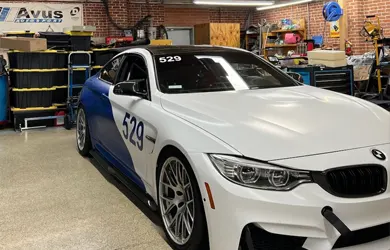
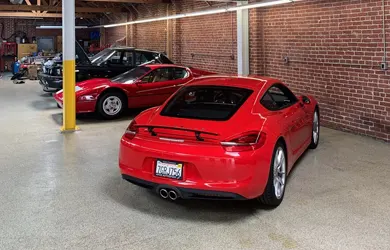
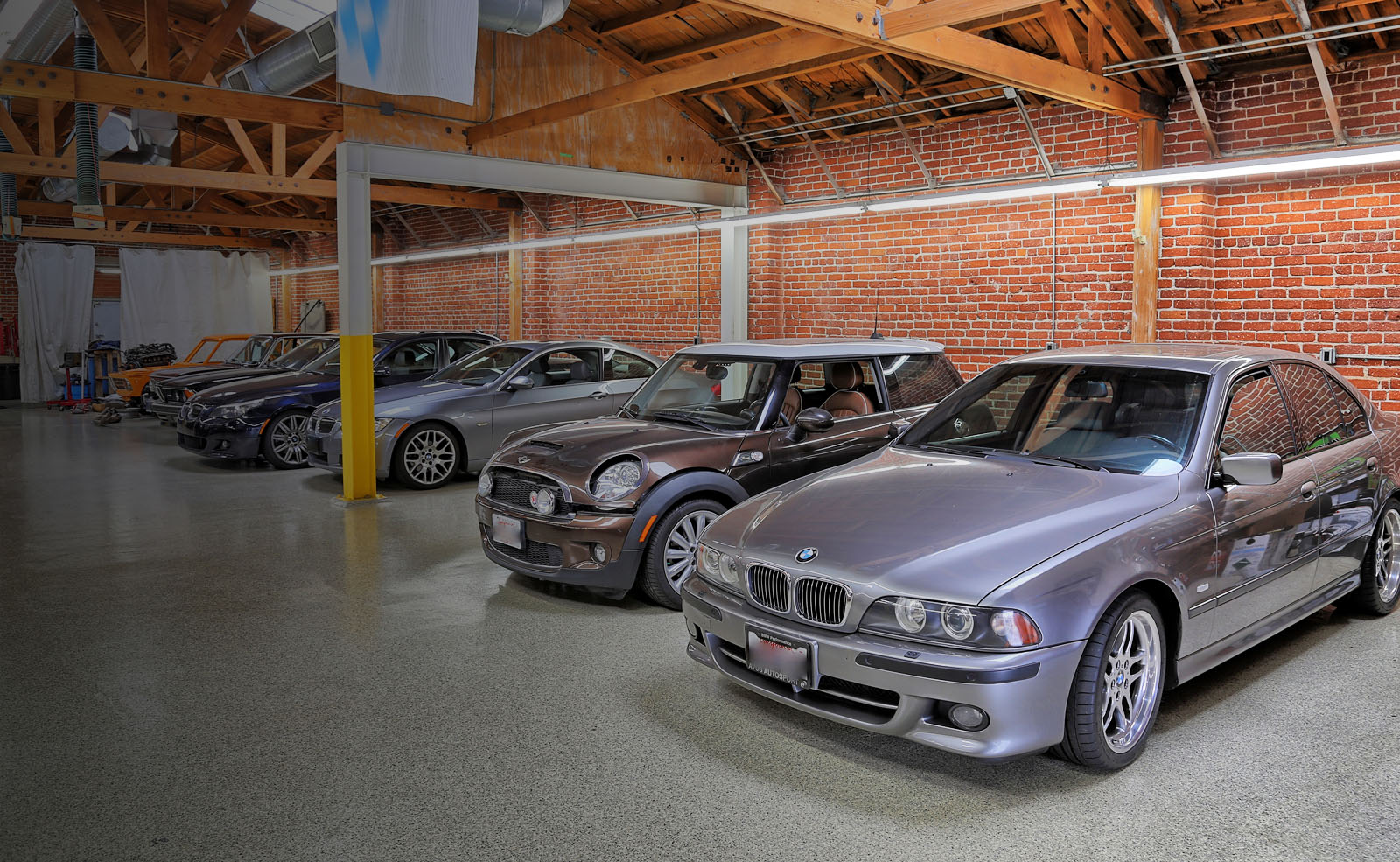
    Avus Autosport’s spacious 6,000 sq. ft. shop, including a separate partsroom (inset). At right is owner Andrew Kahn.

    Avus Autosport

    312 Vine Street

    Glendale, CA 91204

    Tel. (818) 500-7663
    www.avusautosport.com

  9. Cooling System Preventative Maintenance

    Cooling System Preventative Maintenace
    M50, M52, M54, S50, S52 (US-spec) Six Cylinder Engines

    By Mike Miller

    BMW six cylinder water pumps have had premature failure problems since 1992, despite several redesigns. It it rare to see a failure before 60,000 miles, but from then-on you’re on borrowed time. And sometimes, the water pump failure leads to complete engine melt down — if the driver fails to shut down the engine immediately.

    It doesn’t matter if you have the early plastic, the late plastic impeller, or metallic impeller, both fail premature only in different ways. The original design of the OEM pump had a plastic impeller, which would disintegrate and cause overheating and sometimes engine damage. The later OE design had a metallic impeller, and the bearing would seize, causing overheating and sometimes engine damage or destruction. Now we’re back to plastic impellers. Are they better? Who knows? I have had it with these water pumps.

    I recommend the following preventative replacement schedule for the cooling system on this car:

    Every 60,000 miles: water pump, thermostat, plastic thermostat housing if so equipped (or replace it once with the aftermarket aluminum thermostat housing)

    Every 90,000 miles: radiator, expansion tank, fan and fan clutch if so equipped (for cars you’re going to keep forever, consider using the all-aluminum radiator and expansion take from www.zionsvilleautosport.com and you won’t have to do it again at 180,000)

    Every 150,000 miles:  all coolant hoses

    Every two years: drain and fill coolant, including draining the engine block by opening the drain plug on the right side under the exhaust manifolds, replace using fresh original BMW anti-freeze mixed 50-50 with distilled water

    As for the EMP Stewart Heavy Duty Water Pump, they are too new for a verdict really as I haven’t heard of any with high mileage. I note they are marketed as a “high performance” water pump and as much is made of their supposedly improved efficiency. They look good on paper and in person, though, and I plan on installing one on my car to see how long it lasts. The performance of the original water pumps was never a problem. The problem is their lack of durability.

    It actually pains me to recommend replacing the entire cooling system preventively before 100,000 miles, as above. Yet experience has shown this maintenance is cheap compared to the alternative. There is no shortage of engines destroyed in these cars by premature cooling system failres.

    © 2008 Mike Miller